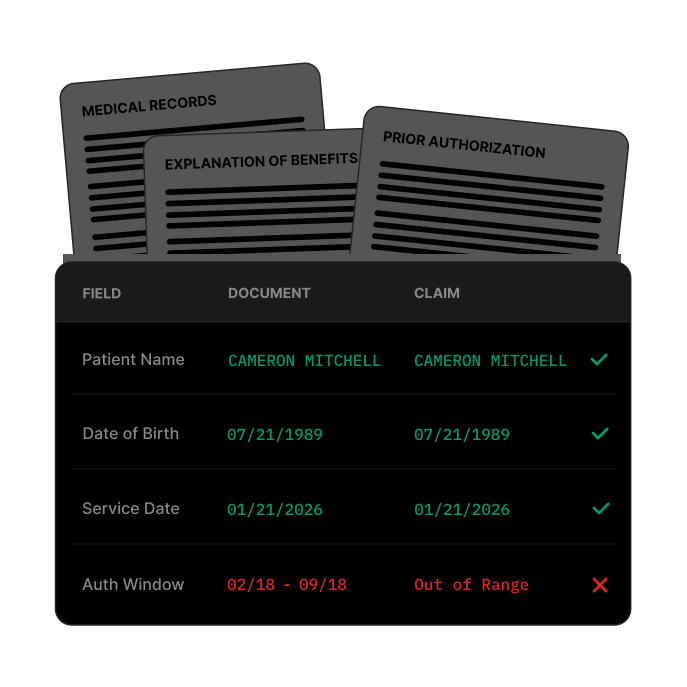
Document Review gives you a deep understanding of every document in your revenue cycle
Categorize & extract details that matter from EOBs, medical records, prior authorizations and more. Our models parse documents faster than humans with fewer mistakes.
Automatically classify documents by type: operative reports, visit notes, lab results, imaging, referrals, prior auths. Hundreds of pages sorted in seconds.
Step 2
Metadata Validation
Confirm the right patient, date of service, provider and procedure. Cross-reference document metadata against claim data to catch mismatches before they are denials.
Step 3
Evidence Extraction
Pull the specific clinical details that matter: diagnosis codes, treatment history, measurement scores. Then map them to payer criteria or appeal requirements.
Analyze every document in your revenue cycle
Medical Records
Explanation of Benefits
Payer Policies
Visit Notes
Prior Authorizations
EOBs & ERAs
Correspondence Letters
Clinical Notes
Medical Records
Explanation of Benefits
Payer Policies
Visit Notes
Prior Authorizations
EOBs & ERAs
Correspondence Letters
Clinical Notes
Medical Records
Explanation of Benefits
Payer Policies
Visit Notes
Prior Authorizations
EOBs & ERAs
Correspondence Letters
Clinical Notes
Save hours
Faster document review instead of manual processing
Parse & categorize hundreds of pages of medical records, visit notes and clinical documents in seconds, not hours.
Operative reports, lab results, imaging and more
Prior authorizations & referrals
Correspondence & payer letters
Validate every detail by cross-referencing document metadata against claim data to catch mismatches before they are denials.
Patient name, DOB, provider and more
Date of service & procedure codes
Authorization windows & coverage dates
Extract what matters from unstructured documents & surface the clinical evidence needed for payment reconciliation.
Reads and interprets EOBs & ERAs
Identifies posting discrepancies
Validates payments against contracted rates
FAQ
What types of documents can it process?
Medical records, EOBs, ERAs, prior authorizations, payer policies, visit notes, correspondence, imaging reports, lab results and more.
How does it handle large documents?
A medical record can be hundreds of pages. The agent categorizes each section, extracts relevant details and maps them to the specific claim or criteria being evaluated.
Does it validate document accuracy?
Yes. It cross-references metadata like patient name, date of birth, date of service and provider against your claim data to catch mismatches.
How does this relate to the other agents?
Document review is the foundation. The Appeals Agent, Policy Agent and Payment Posting all rely on these models to read and understand medical documents.
What EHR systems are supported?
The agent pulls documents directly from your EHR. Integration is system-agnostic and doesn't require switching your PM or EHR.